 listicle
Are Editable Botanical Wall Art Prints Worth Buying?
Last Updated: November 3, 2026
Quick Summary
Editable botanical wall art is worth buying because you get a file you can resize, recolor, and reprint as often as you like, instead of being locked into one size, one color, and one seller's paper choice. Before you buy, check the file format, resolution, and license terms.
- Vector PDFs scale to any size without losing sharpness, which suits large statement prints.
- 300 DPI is a common print-industry benchmark for viewing at normal distance.
- Most editable downloads are Canva templates where text, colors, and placement are editable.
- Export Canva designs as PDF Print at the largest size you plan to print.
- Personal-use licenses usually prohibit reselling, sharing, or selling products made from the file.
Table of Contents
- Why Editable Botanical Wall Art Prints Beat Fixed Prints
- Vintage Botanical Prints: Herbarium Plates and Antique Illustrations
- Watercolor Botanical Prints for Soft, Neutral Rooms
- Modern Botanical Wall Art for Minimalist and Farmhouse Decor
- Large Vintage Botanical Prints for Statement Gallery Walls
- File Formats, Resolution, and Print Quality Before You Buy
- Licensing, Customization, and Printing Your Editable Files
- Downloading Your Botanical Print Set from BriarpatchPaper
- Frequently Asked Questions
Why Editable Botanical Wall Art Prints Beat Fixed Prints
If you have ever bought a print that arrived the wrong size, in a shade that clashed with your walls, or already framed in a style you did not want, you already understand the appeal of editable files. When you buy editable botanical wall art prints, you get a file you can resize, recolor, and reprint as often as you like.
The difference comes down to control. A fixed print locks you into one size, one color, and one seller's paper choice. An editable file hands those decisions back to you.
- Resize freely: print a small pair for a hallway shelf or a large single piece for a statement wall.
- Adjust color: tune greens and ochres to match your existing decor instead of building a room around a poster.
- Reprint forever: a damaged or faded print costs you paper, not another purchase.
- Mix and match: build a gallery wall from one set rather than hunting for pieces that coordinate.
For renters especially, this matters. You can print, display, and swap art without committing to a permanent installation.
Vintage Botanical Prints: Herbarium Plates and Antique Illustrations
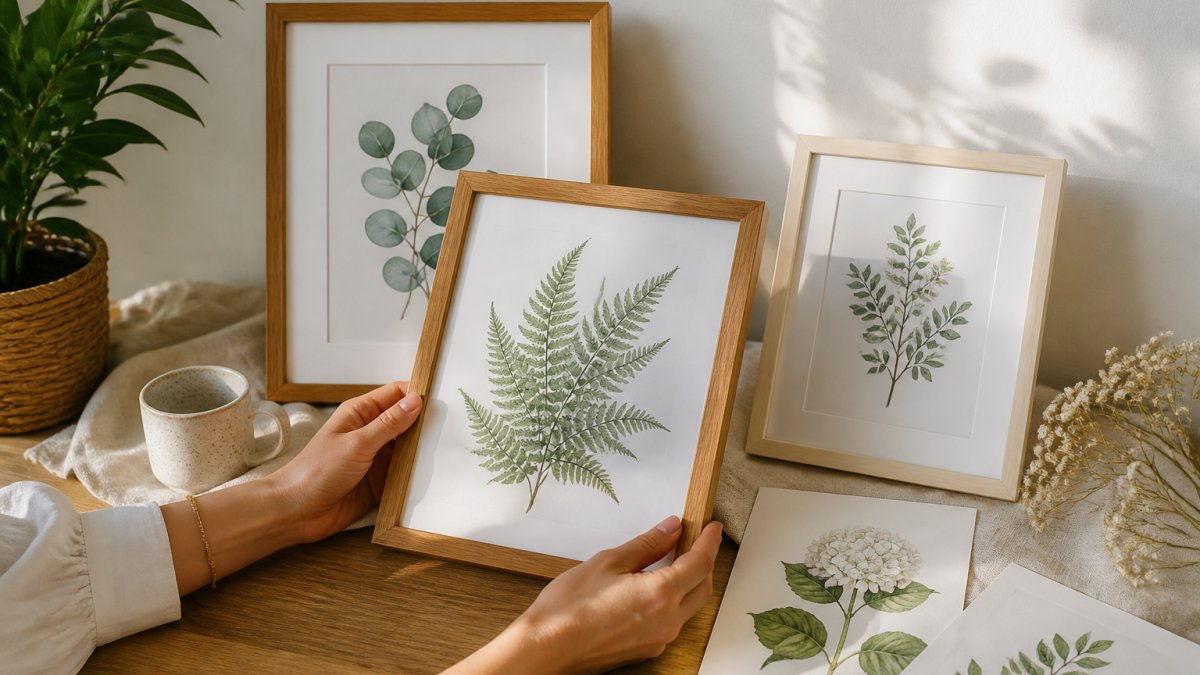
Vintage botanical prints carry a quiet authority that many modern reproductions do not. Herbarium plates, with their pressed ferns and precise plant studies, were originally scientific records, and that precision is exactly what makes them beautiful on a wall today.
The appeal sits in the detail: Latin plant names in fine serif type, muted greens fading into ochre, and leaf studies drawn with a patience that is hard to fake.
When you buy these as editable files, you can lean into the vintage feel or soften it. Want a warmer, aged look? Adjust the paper tone. Prefer a cleaner, more contemporary finish? Brighten the background.
Pair two or three herbarium plates of the same plant family for a cohesive set, or mix ferns with flowering studies for contrast.
Watercolor Botanical Prints for Soft, Neutral Rooms
Watercolor botanical prints solve a specific problem: they add life to a room without adding visual noise. The soft edges and bleeding color of watercolor flowers sit comfortably beside linen, oak, and plaster, which is why they work so well in neutral and farmhouse decor.
These prints suit rooms where you want calm rather than a focal point. A single watercolor leaf study above a bed, or a pair of soft floral prints flanking a window, does more than a bold statement piece would.
A few practical notes from how we design these sets:
- Choose a palette with one accent. A wash of green with a single ochre or blush note reads more intentional than a full rainbow.
- Mind the white space. Watercolor designs breathe; leave generous margins when framing.
- Print on textured paper. A matte or lightly textured stock mimics the original watercolor surface far better than glossy paper.
Modern Botanical Wall Art for Minimalist and Farmhouse Decor
Modern botanical wall art strips the style back to line, shape, and a limited palette. Where vintage prints lean on detail, modern designs lean on restraint: a single monstera leaf, a clean stem study, a simple silhouette in deep green on off-white.
This style fits two very different rooms well. In a minimalist space, a single large leaf study anchors a wall without clutter. In farmhouse decor, a set of simple botanical prints in black or deep green echoes the style's love of natural motifs and honest materials.
Orientation matters. Vertical botanical prints suit narrow walls and hallways, while horizontal sets work above sofas and sideboards. Decide where the piece will hang before you choose the design, not after.
Because these files are editable, you can also flip a design or adjust its proportions to fit an awkward space. That flexibility is the whole point.
Large Vintage Botanical Prints for Statement Gallery Walls
Large vintage botanical prints turn a blank wall into the room's centerpiece. Scale changes everything: a single oversized herbarium plate commands attention in a way a small framed print never will.
Gallery walls built around large botanical prints work best with a clear structure. Our approach:
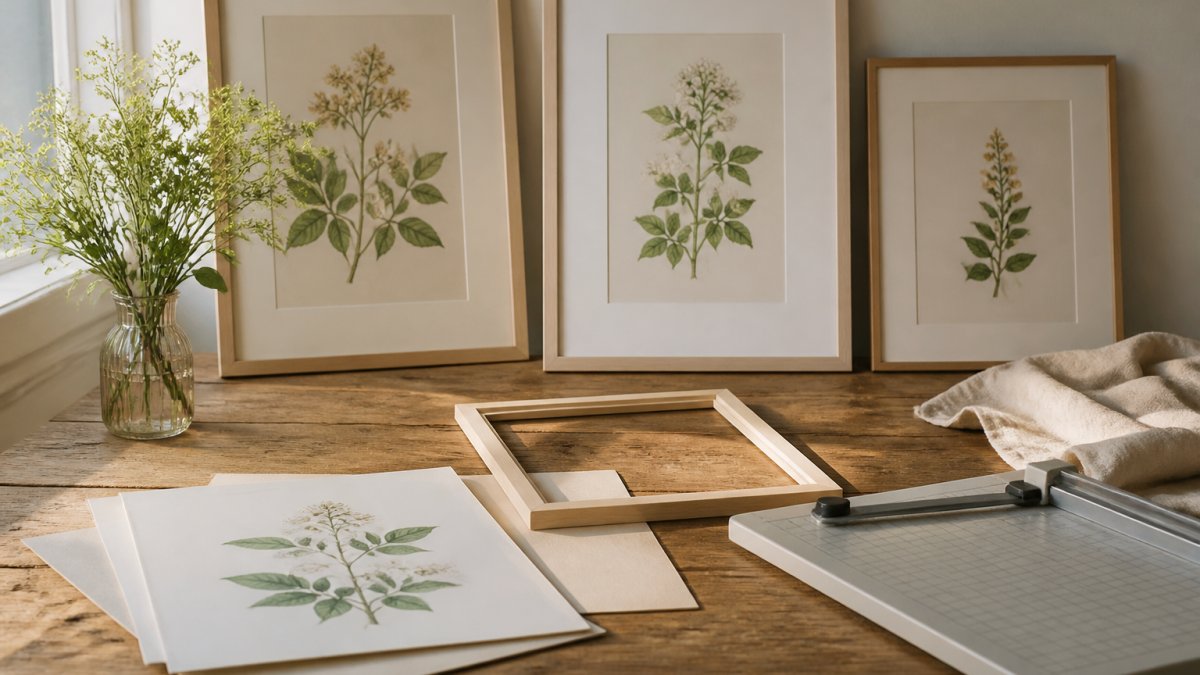
- Anchor with one large piece, then build outward with two to four smaller prints.
- Keep a consistent gap between frames, usually a hand's width.
- Repeat a color across the set so the wall reads as one composition.
- Match frame finishes to avoid a cluttered look.
Multi-panel art, where one botanical illustration is split across two or three frames, is another option for wide walls. It gives you the impact of a large print without a single heavy frame.
Print large files on heavier stock so they hold up at size, and check the resolution guidance in the next section before you commit to a big format.
File Formats, Resolution, and Print Quality Before You Buy
Print quality is where weak downloads reveal themselves. A file that looks crisp on screen can turn soft and pixelated the moment it is printed at A2 or larger.
File format matters because it determines what you can edit and how cleanly it prints. The breakdown below covers the formats you are likely to encounter:
- PDF (vector or high-resolution): the safest format for printing. Vector PDFs scale to any size without losing sharpness, which is why they suit large statement prints and multi-panel sets. Text and line work stay crisp at A1 and beyond.
- JPG: universally accepted by print shops and home printers, but it is a raster format, every enlargement stretches the same pixels. Fine for small and medium frames; risky at poster size unless the file is genuinely high-resolution.
- PNG: the format to look for when a design has a transparent background, such as a single stem or leaf study you want to place over a colored wall or layered composition. PNGs are lossless but heavy, and not every print service handles transparency cleanly.
- Editable Canva templates: a link to a template rather than a finished file. You edit in a browser, then export as PDF Print or PNG. Convenient, but your export settings decide the final quality, see the customization section below.
Resolution is the number that predicts sharpness, and it is usually expressed in DPI (dots per inch) at a stated print size. 300 DPI is a common print-industry benchmark for viewing at normal distance. Two cautions follow from that:
- A file described only as "high resolution" without a size is not a spec, ask for the pixel dimensions (for example, 3000 x 4000 px) and divide by 300 to get the largest clean print in inches.
- Upscaling a small file in Canva or Photoshop does not add real detail. It interpolates, and botanical line work is exactly the kind of fine detail that shows the softness first.
Color is the third variable buyers overlook. Files are usually supplied in RGB, the color space of screens, while print shops often work in CMYK.
Paper and stock finish the job. Matte and lightly textured stocks often suit watercolor and vintage herbarium styles because they absorb ink without glare. For large prints, a heavier paper weight can help resist buckling in the frame.
For a step-by-step walkthrough of getting a clean print at home or at a shop, see our guide on how to print digital wall art clearly. If pixelation is your specific worry, our deeper guide to printing wall art without pixelation covers it in detail.
Here is how the main file formats compare for editing and printing.
| Format | Best for | Key difference |
|---|---|---|
| PDF (vector or high-resolution) | Large statement prints and multi-panel sets | Vector PDFs scale to any size without losing sharpness |
| JPG | Small and medium frames | Raster format; every enlargement stretches the same pixels |
| PNG | Designs with a transparent background | Lossless but heavy; not every print service handles transparency |
| Editable Canva templates | Editing in a browser, then exporting | Export settings decide the final quality |
Licensing, Customization, and Printing Your Editable Files
Check the seller's license terms before you plan a project around a download. Personal-use and commercial rights can differ, so confirm which applies to your use.
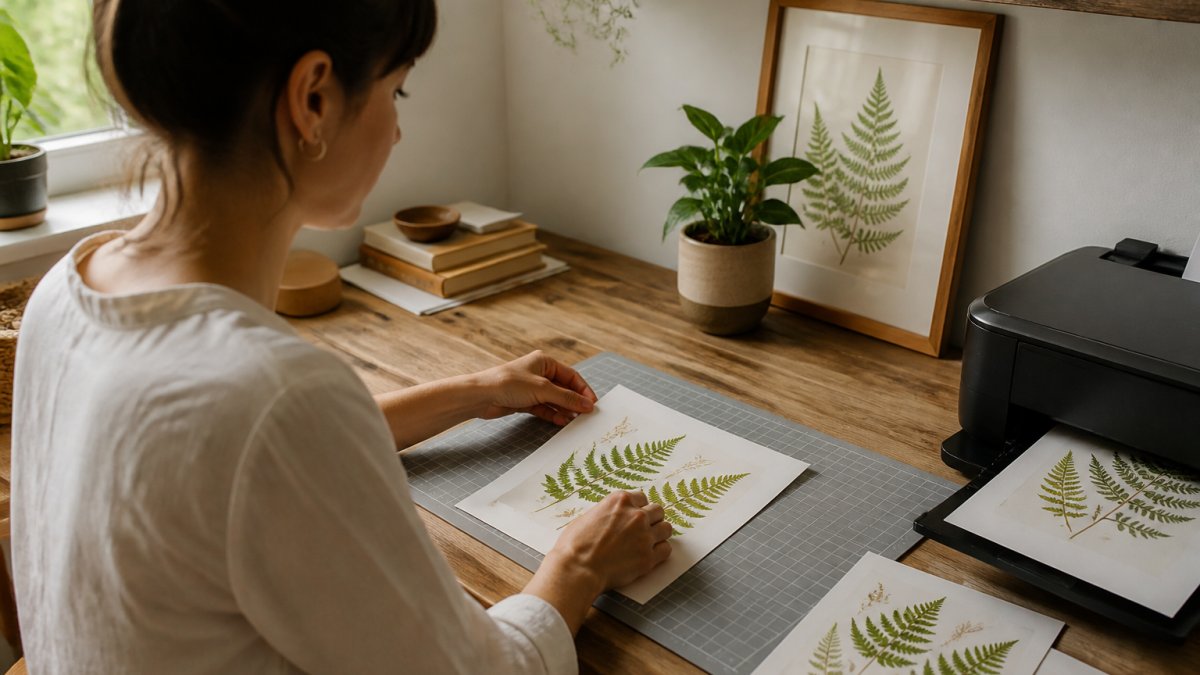
What software you need. Editable files are typically used through Canva, which is browser-based. Check the listing for the format you will receive and whether any additional software is needed before checkout.
How editing affects print quality. This is the mechanism most guides skip.
Printing options. Home inkjet on matte or textured paper works well for small and medium frames; a local print shop or online printing service gives cleaner results and better paper choices at large formats.
Buyer-confidence checklist. Before purchasing a digital product, check the preview, template compatibility, download instructions, and the refund policy on the listing.
Downloading Your Botanical Print Set from BriarpatchPaper
Our botanical wall art downloads are designed to be chosen, downloaded, and printed at the size your wall needs. Many sets feature botanical and nature-inspired designs in a calm, minimalist style.
Here is how we would approach a first purchase:
- Measure the wall and note the frame sizes you already own.
- Pick a set that matches your room's palette.
- Download the files and keep the originals safe.
- Customize color or size in Canva if needed.
- Print on matte or textured stock at your chosen size.
- Frame, hang, and live with it for a week before adding more.
What you get is a set of aesthetic, ready-to-use digital tools for decorating your space. Our shop also carries editable invitation templates and hyperlinked digital planners.
Frequently Asked Questions
Can I edit botanical wall art before printing it?
Yes, when the listing says the file is editable. Editable botanical wall art usually arrives as a Canva template link, so you can change the plant name, caption, background color, or layout before downloading. Check the listing for the words editable or template, because a standard PDF or JPG download cannot be changed. If you only need the design as it is, a fixed file is fine and often cheaper.
What file format is best for printing botanical wall art?
PDF suits sharp line work such as herbarium plates and leaf studies, while high-resolution JPG or PNG works well for watercolor flowers and softer plant studies. Check the listing for the resolution at the size you plan to print, since higher resolution keeps edges crisp on a framed print or canvas print. Ask the seller for the largest size included before you buy, especially for large vintage botanical prints.
What size should I print botanical wall art?
Match the print size to the wall and the frame you already own. A single stem or leaf study reads well at A4 or 8x10 inches on a shelf or in a small hallway, while a multi-panel art set or large vintage botanical prints need A2 or bigger to hold a wide wall. Measure the space first, then pick a print orientation, vertical or horizontal, that fits the gap.
Can I print botanical wall art at home?
You can print at home on a decent inkjet or laser printer using matte photo paper or card stock, and the result is fine for small unframed prints. For anything larger than A4, or for a gallery wall where color accuracy matters, a local print shop gives sharper detail and better paper choices. Either way, print one test page before running the full set.
Where can I find editable botanical art prints for wall art?
BriarpatchPaper sells botanical and nature-inspired printable wall art as instant downloads, alongside editable Canva templates. Read the listing description to confirm the file is editable, what sizes are included, and whether personal use only applies.
Decorating a room well takes time, and buying art that only works in one spot makes it harder. Editable botanical wall art removes that risk: you can resize, recolor, and reprint until the piece fits the room rather than the other way around. BriarpatchPaper offers instant digital downloads, editable Canva templates, and botanical designs made to sit quietly in real homes. Get started with BriarpatchPaper and build a wall you can change as often as you like.